This post is a second commentary on the audio text “Our Hands” by Dr. James Jealous. Quotations are from the audio file.
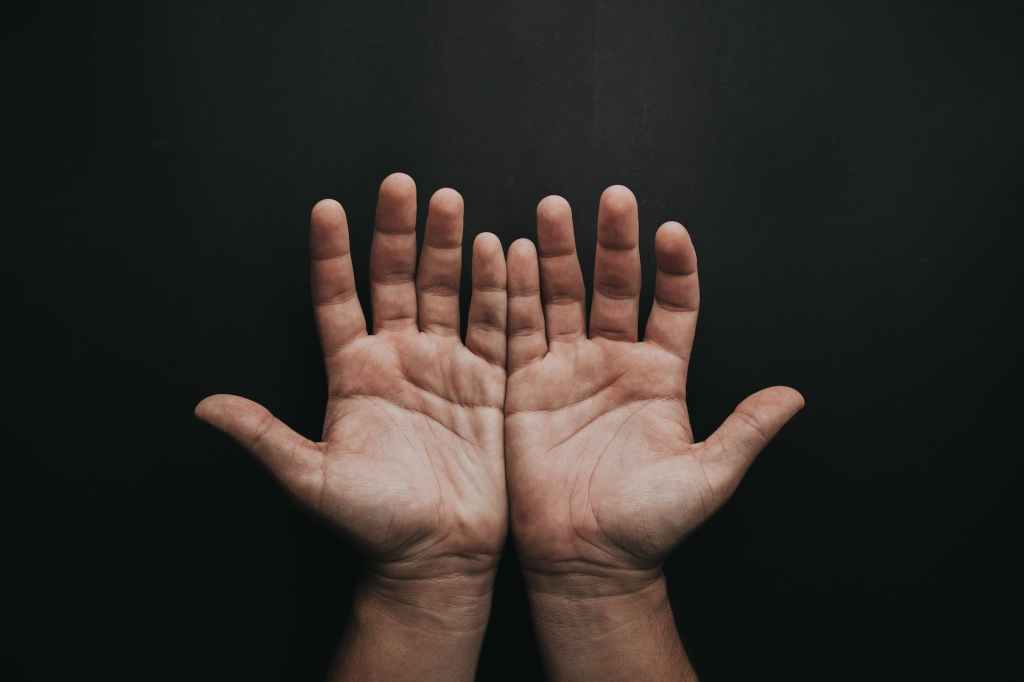
Our hands develop senses; “Our hands have to listen. They have to see, they have to taste, and they have to smell.”
They learn quietness and within that quietness they recognize meaning. This happens over time, as we learn to practice biodynamically. Dr. Jealous tells us, we can have these gifts if we build a relationship with our hands. They become our partners in this work and they have their own mind and senses. It sounds magical, but it describes the experience of sensing and working osteopathically.
Think for a minute about the process of knowing. We interact with our environment through our senses and then the interaction results in a message being sent to our central nervous system, which is then recorded and interpreted, and a thought arises. “That is a rock.” It’s more complex than I’ve just described, but the point is, we don’t get an idea before the interaction happens with our senses. Our brain doesn’t know the rock until we interact with it – whether we see it or feel it or read about it or stub our toe on it, it isn’t there for us until we have some kind of relationship to it through our sensory system. As our hands develop these sense like skills described by Dr. Jealous, we begin have a new way to interact with the world, to learn, and to help our patients. How do we train our hands to sense this way? Listen to this audio text. In it Dr. Jealous describes the transitions required to develop our hands.
Dr. Jealous discusses how working this way we arrive in a meditative state and this is a useful comparison to help us understand what’s happening in our hands.
One of the first concepts in meditating is non-attachment. We have thoughts but we don’t attach to them. A feeling arises and we notice it but don’t try to understand it. In biodynamics we do a similar thing. We allow our hands to interact but we interrupt the interpretation process – much like a meditation in which we see our thoughts but do not attach to them.
The meditation metaphor can be taken further if we want to know how it is our hands start to develop new senses. If you’ve studied meditation you likely know that there are levels of consciousness that can be experienced through the practice of meditation. The same is true about the practice of biodynamic osteopathy. We enter different types of consciousness when we work. It’s not something we discuss often, but it is a remarkable experience. Perhaps these senses that our hands develop are indicative of a different type of consciousness.
Dr. Jealous warns that studying biodynamic osteopathy isn’t for everyone. There are many reasons for that. The bottom line is, you have to decide if the clinical results are worth the effort. But the warning is also foreshadowing a shift in the doctor. If you do this work you’ll be transformed. Just as you would be transformed by practicing meditation over many years you will be changed if you practice biodynamically. Are you in?
 Osteopathic Health Access